

When OpenAI released ChatGPT almost four years ago it set off a wave of hype, grand promises and investment. It was the first time an artificial intelligence system like it was available to the public.
Today, the main interaction most people have had with artificial intelligence is still a conversation with a chatbot, or an unusual video on social media. AI is without question an incredible tool. The challenge is using it to advanced research and science, instead of creating slop. It is a challenge that researchers are answering.
There is a moment in the history of every transformative technology when the demonstration has already happened, but the promise has not yet been realised. Artificial intelligence is facing such a moment right now.
Australia faces a decision. Do we want to be users of this technology, but rely on AI models that we have had nearly no say on? Or do we want to invest in our growing capabilities and harness AI to solve our biggest challenges.
AI promises to revolutionize our society, like the internet and the factory did before it. Australia is an early adopter. A recent report counts 13.6 million Australians using AI tools. Over the past year, investment in the national data centre pipeline has exceed $155 billion.
But infrastructure and use do not create an Australian AI capability.
The true value of AI is in the development of models and the expertise needed to adapt them to specific industries and challenges. That is where the research producing them is done, and where the judgement about what they should and should not be used for is formed. It is also the only part that generates capability rather than dependency.
Australia remains underrepresented in this part of the process. But this is changing.
At The University of Queensland, we counted more than 100 research projects occurring that are advancing AI to tackle some of the nation’s biggest challenges. Without the expertise and capabilities to build our own versions of this technology, we risk becoming a sophisticated consumer of a technology we have little hand in shaping.
Frontier research for sovereign capability
Development on new models is just one part of AI research. How AI systems are built and what technologies they use is just as important. Increasingly, the question many are trying to solve is how we reduce the power impacts of data centres.
UQ spinout company Cortisonic, founded by Dr Glen Harris and Dr Christopher Baker, is commercialising a new class of chip technology that uses soundwaves instead of conventional electronics to process information. The product has the potential to massively reduce the energy requirements of traditional computing chips and enable powerful AI capabilities on drones, sensors and wearables that are not connected to data centres.
Australia does not need to win a race against the hyperscalers, but we can compete by finding ways to do more with less energy consumption.
Comparative advantage through domain-specific models
You may not have heard of it, but the AI platform that has had the biggest impact is not Claude or ChatGPT. The Google-own AlphaFold platform reshaped how scientists understood structural biology. AlphaFold was not a tool that could do everything, it was built for one hard problem by people who understood that problem.
Australia need the local capabilities to build specific models that can utilise the data we have on our health, our environment and our industries. Every year skin cancer kills more than 2000 Australians, more than anywhere else in the world. UQ dermatology Professor Monika Janda is harnessing AI to better detect skin cancer and monitor skin changes. This work has created world-first algorithms that count moles, map sun damage, and predict risk. For patients who cannot easily access dermatologists to get accurate skin checks this could save lives.
Building talent for an AI-powered world
Australia is short on high-skilled tech workers. Nearly half of the nation’s business leaders name AI skills gap as the biggest challenge to better using the technology. Our universities are ideally placed to produce workers who can not just operate AI systems but build them.
AI can negatively impact learning by removing the effortful work that builds expertise. UQ’s Associate Professor Hassan Khosravi calls it ‘cognitive offloading’. But his team has developed a learning platform that harnesses AI to teach critical thinking.
Called RiPPLE, it aims to protect against cognitive offload while strengthening critical thinking and problem-solving skills. More than 100,000 students have used RiPPLE and reported measurable improvements in learning and course engagement. It is being turned into a commercial offering.
The question facing Australia is not whether AI will transform our economy. It is whether we help build that future at home or import it. The research sector is where that choice is made. To shape the future of artificial intelligence, we must invest in the research, infrastructure and talent that underpins a sovereign AI capability. That requires strong partnerships between industry, government and universities, translating world-class research to real-world problems. If we want to be more than just AI users, we must help build it here.
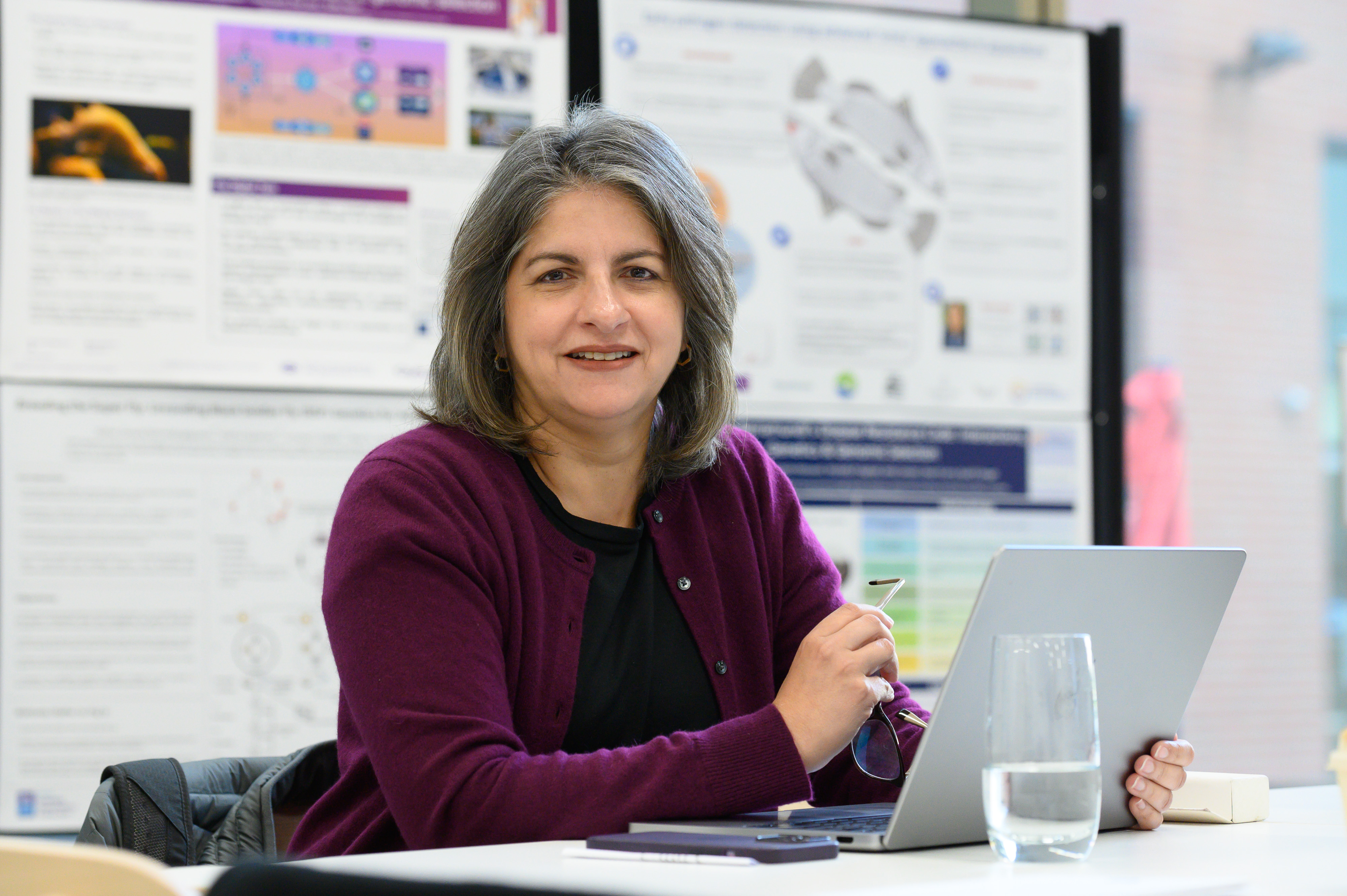
Author
Professor Shazia Sadiq
Computer scientist
The University of Queensland